Key Takeaways
No proof of funds is needed for a UK ETA in 2026 — you pay £20 and answer a few travel questions. Here's what Border Force can still ask on arrival.
No, the UK ETA has no financial requirement. The application asks for your passport, a photo and a few simple questions. It never requests bank statements, payslips or a minimum balance. The only cost is the £20 fee. A Border Force officer can still ask how you will pay for your trip when you land, so keep your booking details ready.
TL;DR: There is no savings test and no financial paperwork for an ETA. You pay £20, answer questions about your passport and travel, and most approvals arrive within minutes. Border Force officers may occasionally ask arriving visitors about accommodation, return flights or spending money, so keep those details handy. You don’t have to carry a fixed amount of cash.
| Quick Facts (2026) | Detail |
|---|---|
| Proof of funds in the ETA form | Not required — no bank statement or balance |
| ETA fee | £20 (since 8 April 2026) |
| What the form asks | Passport, photo, contact and travel questions |
| Border Force can ask | How you fund and where you stay during the visit |
| Length of stay | Up to 6 months per visit |
Key facts at a glance:
- The ETA online form has no income or savings question — confirmed on gov.uk/eta.
- You pay a single £20 fee, in place since 8 April 2026.
- An ETA lets you stay up to 6 months per visit, with unlimited entries over 2 years.
- Border officers keep the power to check that any visit is genuine — see what happens at UK border control.
- Most decisions land within minutes; the official service standard is 3 working days.
Plenty of travellers mix up two separate things: the ETA itself, and the check an officer can run when you arrive. The ETA application is light. The arrival check is where money can come up, and even then only sometimes. This guide splits the two so you know exactly what to prepare. For the full price picture, see our UK ETA cost breakdown.
Does the ETA application ask about your finances?
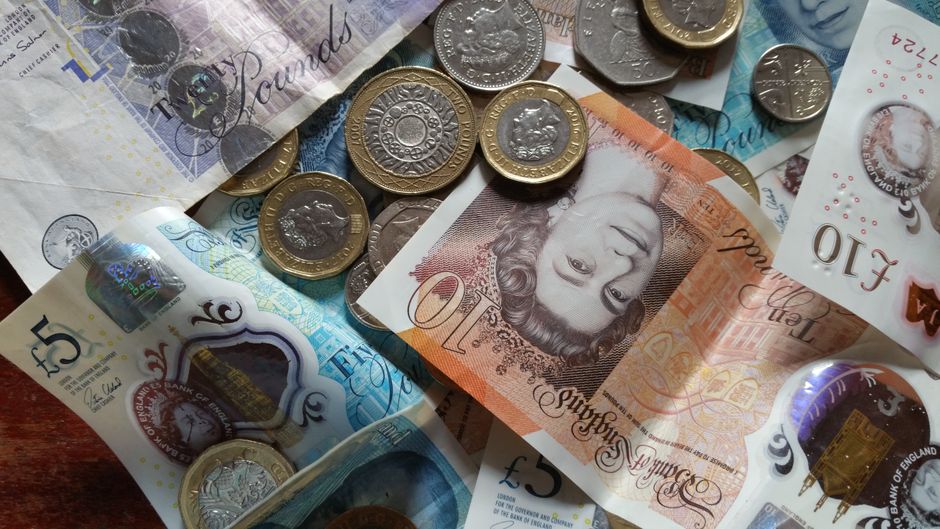
No. Nowhere in the form do you enter a bank balance, upload a statement or declare a salary. You give your passport details, a photograph, your contact information, and answer security questions about criminal convictions and immigration history. That is the whole picture. The official ETA guidance lists these fields, and money is not among them.
Compare that with a full visit visa. Applicants for a standard visitor visa route often do show bank statements covering several months. The ETA replaced that burden for eligible nationalities. Since 25 February 2026, every visa-free traveller — including EU citizens — needs an ETA, yet none of them file financial evidence to get one. Want the exact document list? Our ETA documents checklist covers it.
| Requirement | UK ETA | Standard Visitor Visa |
|---|---|---|
| Bank statements | No | Often yes |
| Proof of funds | No | Yes |
| Fee | £20 | £135 (6-month) |
| Decision time | Usually minutes; up to 3 working days | About 3 weeks |
Can Border Force ask about money when you arrive?

Yes, and this is the part people miss. An ETA gives you permission to travel to the UK. It does not guarantee entry. On arrival, an officer decides whether to admit you, and the law lets them ask how long you plan to stay, where you will sleep and how you will cover your costs. Most visitors get a nod and a stamp-free e-gate pass in under a minute. A small number get a few questions.
Picture this. Amara flies from Lagos to Manchester for a two-week family visit. At the desk, the officer asks where she is staying. She names her sister’s address and shows a return flight on her phone. Thirty seconds later she is through. She never mentions a bank balance, because she did not need to. What convinced the officer was a clear, believable plan. Read what to expect at UK border control before you fly.
Pro tip: Save three things to your phone before landing: your hotel or host address, your return or onward ticket, and a rough daily budget. That trio answers almost any question an officer might raise about funds.
How much money should you bring to the UK?

There is no legal minimum. The UK sets no fixed sum a visitor must hold, unlike a few countries that publish a daily figure. What matters is that your money matches your plan. A week in a London hostel needs far less than a fortnight in hotels. Daily costs vary widely with accommodation, food and transport, so it helps to add up your own estimate for each category. Our daily food cost guide for London and the under-£50-a-day budget guide give concrete numbers.
- Book your first nights. A confirmed hotel or a host’s address answers the “where will you stay” question instantly.
- Keep a return or onward ticket. It shows you plan to leave within the 6-month limit.
- Carry a mix of payment. A card plus a little cash covers you; the UK is largely cashless and contactless.
What if an officer is not satisfied?
Refusals at the border are rare for genuine visitors, but they happen when a story does not add up. If someone claims a one-week holiday yet carries a one-way ticket and no accommodation, an officer may probe further. The fix is simple preparation, not a fat bank balance. Line up your UK entry requirements in advance and you remove almost every reason for doubt.
One more myth to bin: an ETA does not expire the moment you have “enough” money, and topping up your account changes nothing about the authorisation. The ETA stands for 2 years regardless. Money only ever enters the conversation as evidence that a specific trip is real. If you were refused before, our guide on arriving without the right permission explains how officers weigh these decisions.
Not sure whether to sort this yourself or hand it over? Older travellers and first-time applicants often prefer a second pair of eyes on the form. You can apply directly on gov.uk for £20, or let us check the details and support your application so nothing trips you up at the airport.
Practical tips before you travel
- Apply early: lodge your ETA a few days ahead — see our ETA timing guide for the ideal window.
- Match funds to plan: a modest, well-documented trip beats a vague one with lots of cash.
- Keep proof reachable: screenshots of bookings work when your signal drops in the arrivals hall.
- Check the fee: confirm the current £20 charge on our ETA fee guide before you pay.
- Know the timeline: the approval timeline explains why most people hear back in minutes.
Before you finalise anything, glance at the current UK ETA price guide so the £20 fee is the only charge you meet during the process.
Your next question is often about the trip itself, so it is worth checking the government’s own foreign travel advice and the standard visitor rules for what you can and cannot do on a short stay.
Frequently Asked Questions
Do you need proof of funds for a UK ETA?
No. The application never asks for bank statements, a minimum balance or income evidence. You give your passport details, add a photo, answer travel and security questions and pay the £20 fee.
Can Border Force ask how much money I have?
Yes. On arrival an officer may ask how you will fund your stay, where you are staying and when you leave. This is separate from the ETA and only happens with some travellers, usually briefly.
How much money should I bring for a UK visit?
There is no fixed amount. Bring enough to match your plan — a hostel week needs far less than a hotel fortnight. Daily budgets vary, so estimate the cost of your room, food and transport for each day of your trip.
Is the UK ETA the same as a visitor visa?
No. The £20 ETA is a lighter travel authorisation for visa-free nationalities and needs no financial documents. A standard visitor visa costs more, takes about three weeks and often asks for bank statements.
Will more money in my account improve my ETA chances?
No. The ETA has no savings test, so your balance does not affect the decision. Approval depends on your passport, answers and security checks, not on how much cash you hold.
What documents help at the UK border?
A confirmed hotel or host address, a return or onward ticket, and a rough budget cover almost every question. Save them to your phone so you can show them quickly if asked.
Does the ETA guarantee I can enter the UK?
No. An ETA lets you travel to the UK, but a Border Force officer still decides entry on arrival. Genuine visitors with a clear plan are admitted in almost every case.
Author: James Crawford, Travel Documentation Editor, covering UK entry requirements and cross-border travel. Last updated: 2026-07-20 — verified against gov.uk guidance.
We are an independent travel-assistance service and not a government body. You can apply for a UK ETA directly on gov.uk for £20, or use our check-and-support service if you would like help getting the details right.
 English
 العربية
 বাংলা
 Български
 Català
 简体中文
 Hrvatski
 Čeština
 Dansk
 Nederlands
 Eesti
 Suomi
 Français
 Deutsch
 Ελληνικά
 עִבְרִית
 हिन्दी
 Magyar
 Íslenska
 Bahasa Indonesia
 Italiano
 日本語
 한국어
 Latviešu valoda
 Lietuvių kalba
 Bahasa Melayu
 Norsk bokmål
 Polski
 Português
 Română
 Slovenčina
 Slovenščina
 Español
 Svenska
 Türkçe
 Tiếng Việt