Key Takeaways
Norwegian citizens need a UK ETA from April 2025. Learn how to apply, costs (£20), validity, Oslo and Bergen flight routes, and UK border control tips.

Norway stands out among the Nordic nations as the country whose citizens spend the most per visit to the United Kingdom. With roughly 623,000 Norwegian visitors arriving each year and a staggering total expenditure of £471.5 million, the average Norwegian traveller spends approximately £757 per trip — the highest of any Nordic nationality. Whether it is shopping in London, visiting the Scottish Highlands, or attending business meetings in the City, Norwegians are deeply invested in the UK as a destination.
Since 2 April 2025, Norwegian citizens have been required to hold a valid UK Electronic Travel Authorisation (ETA) before travelling to Britain. With full enforcement in place since 25 February 2026, airlines will not allow you to board without a confirmed ETA. This comprehensive guide explains everything Norwegian travellers need to know, including costs, application steps, flight options from Oslo and Bergen, and what to expect at UK border control.
What Is the UK ETA and Why Do Norwegian Citizens Need It?
The UK Electronic Travel Authorisation is a mandatory digital travel permit introduced as part of Britain’s post-Brexit immigration framework. Before Brexit, Norwegian citizens — as EEA nationals — could enter the UK freely with minimal formality. Although Norway is not an EU member state, its membership of the European Economic Area (EEA) meant its citizens enjoyed similar freedom of movement rights.
That arrangement ended with Brexit. While Norwegians still do not need a visa for short visits, they now need pre-authorisation through the ETA system. The ETA functions as a security screening tool, checked against immigration and criminal databases before you travel. It is comparable to the US ESTA system or Australia’s ETA, and similar to the upcoming EU ETIAS that will apply to non-EU nationals visiting the Schengen Area.
Given that 99% of Norwegian visitors to the UK arrive by air, the ETA check happens primarily at the airline check-in stage. Without a valid ETA, you will be prevented from boarding your flight at Oslo Gardermoen, Bergen Flesland, or any other departure airport.
UK ETA Requirements for Norwegian Citizens
Norwegian citizens need the following to apply for a UK ETA:
- A valid Norwegian biometric passport — The passport must contain an electronic chip (indicated by the chip symbol on the front cover). The ETA is digitally linked to your passport number.
- A clean immigration record — No previous overstays, deportations, or entry refusals in the UK.
- No disqualifying criminal history — Certain criminal convictions may result in an ETA refusal.
- A valid email address — Your ETA confirmation is delivered electronically.
- A debit or credit card — To pay the £20 application fee.
- A permitted travel purpose — Tourism, business meetings, transit, short-term study (up to 6 months), or medical treatment.
Unlike a visa application, you do not need to provide proof of accommodation, bank statements, return flight bookings, or invitation letters. The process is deliberately streamlined. For the complete list of requirements, visit our UK ETA requirements page.

How to Apply for a UK ETA from Norway: Step-by-Step
The UK ETA application is designed to be completed in under ten minutes. Most Norwegian applicants receive approval almost instantly. Follow these steps:
- Choose your application method — Download the UK ETA app from the App Store (iOS) or Google Play (Android), or apply through the GOV.UK website.
- Scan your Norwegian passport — If using the app, hold your phone against the passport’s back cover to read the biometric chip via NFC. The app will extract your personal details automatically. If applying online, you will enter your passport information manually.
- Provide a facial photograph — The app will ask you to take a selfie. Ensure good, even lighting and a neutral expression. Remove glasses and face the camera directly. Our photo requirements guide has detailed tips.
- Answer eligibility questions — A brief set of questions about your criminal history, previous immigration issues, and the purpose of your trip.
- Pay the £20 fee — Approximately 252 NOK at current exchange rates. The fee rose from £16 to £20 on 8 April 2026.
- Submit your application — Review all information carefully before submitting. Errors in passport numbers or personal details can cause delays or refusals.
- Receive your ETA — An email confirmation will arrive once approved. The ETA is linked to your passport electronically — there is no physical document or sticker.
We recommend applying at least one week before your travel date. While most approvals come through in minutes, the official processing time allows for up to 3 working days. For a detailed walkthrough, see our UK ETA application guide.
UK ETA Cost and Validity for Norwegian Travellers
The UK ETA costs £20 per person, which is roughly 252 NOK based on current exchange rates. The fee is non-refundable.
Here are the key details on validity:
- 2-year validity — The ETA remains valid for two years from the date of issue, or until your passport expires, whichever comes first.
- Unlimited entries — You can visit the UK as many times as you wish during the validity period.
- 6-month maximum per visit — Each individual entry allows a stay of up to six months.
- Individual requirement — Every traveller needs their own ETA, including children and infants. There is no family rate or child discount. See our ETA for children and families guide.
- Passport-linked — If you renew or replace your Norwegian passport, you must apply for a new ETA.
For frequent travellers between Norway and the UK — of which there are many in the oil and gas, maritime, and financial sectors — the two-year validity and unlimited entries make the ETA a relatively minor administrative step rather than a significant barrier.
Flying from Norway to the UK: Routes and Airports
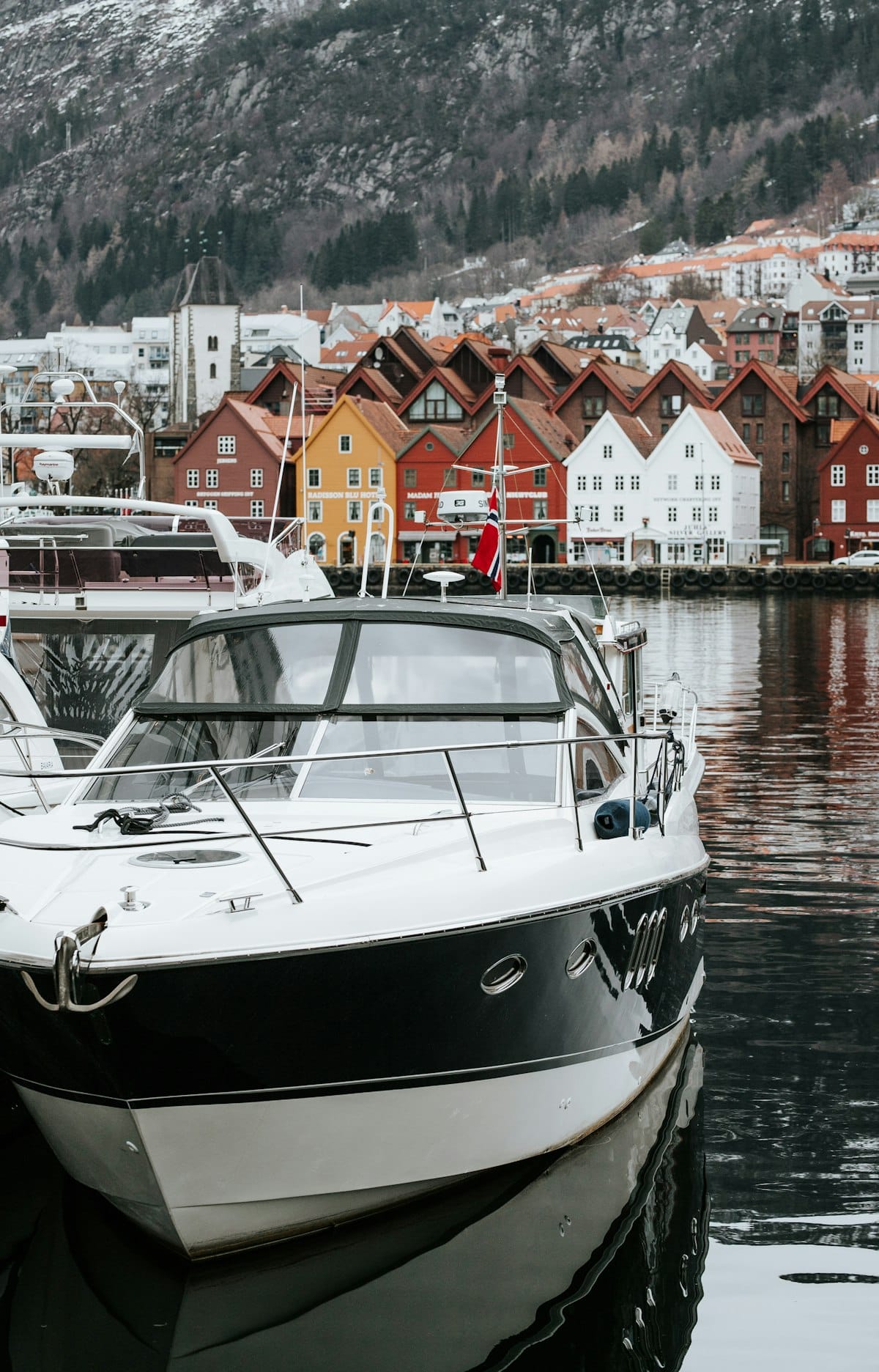
With 99% of Norwegian visitors arriving by air and 71% flying directly to London, air connectivity between the two countries is excellent. Multiple airports in Norway offer direct UK flights, with Oslo Gardermoen (OSL) being the primary hub.
Oslo to London
The busiest corridor, served by multiple carriers:
- SAS (Scandinavian Airlines) — Several daily flights to London Heathrow (LHR). SAS remains the premium choice for Norwegian business travellers.
- Norwegian Air Shuttle — High-frequency low-cost services to London Gatwick (LGW). Norwegian is headquartered in Oslo, making this a natural home-carrier route.
- British Airways — Daily flights to London Heathrow, with strong connections for onward UK domestic and international travel.
- Ryanair — Budget flights to London Stansted (STN), ideal for leisure travellers.
- Wizz Air — Services to London Gatwick, competing on price with Norwegian and Ryanair.
Oslo to Other UK Cities
- Edinburgh — SAS and Norwegian operate direct flights. Scotland is a popular destination for Norwegian tourists, drawn by the shared Viking heritage and Highland scenery.
- Manchester — Norwegian and SAS offer direct services, popular for both tourism and connecting to Northern England.
- Aberdeen — Given the strong oil and gas links between Norway and Scotland, this route serves significant business traffic. SAS and Wideroe have operated services on this corridor.
Bergen to the UK
Bergen Flesland (BGO), Norway’s second-largest airport, offers:
- Wideroe and SAS — Services to London and Aberdeen. The Bergen-Aberdeen route is particularly notable given the North Sea oil industry connections.
- Norwegian — Seasonal London Gatwick services.
Stavanger and Trondheim
Stavanger (SVG), another oil industry hub, has direct London flights with SAS and Norwegian. Trondheim (TRD) has more limited direct UK connections, with most travellers connecting via Oslo.
Flight times from Oslo to London are approximately 2 hours 20 minutes. From Bergen, expect around 2 hours 30 minutes.
Prefer to read in Norwegian? The independent guide Fly fra Norge til Storbritannia on etauk.no lists the direct routes from Oslo, Bergen, Stavanger and Trondheim to UK airports, together with practical tips for the trip.
Do Norwegian Citizens Need an ETA for Transit Through the UK?
Yes. Norwegian citizens transiting through any UK airport need a valid ETA, even if they remain airside and do not pass through UK border control. This applies to connections at London Heathrow, Gatwick, Manchester, and any other UK airport.
This is particularly relevant for Norwegian travellers connecting through London to destinations in the Americas, Africa, or Asia. If your itinerary includes a UK stopover of any kind, ensure your ETA is in place. For more details, see our UK ETA transit rules guide.
UK ETA vs EU ETIAS: What Norwegian Travellers Should Know
Norway occupies a unique position here. As an EEA member but not an EU member, Norway is part of the Schengen Area. Norwegian citizens therefore travel freely within Schengen without any authorisation. The EU ETIAS system, when launched, will apply to non-EU/EEA nationals visiting the Schengen Area — it will not apply to Norwegian citizens travelling within Europe.
However, when travelling to the UK, Norwegian citizens are treated the same as all other non-British nationals and must hold a valid UK ETA. Here is how the two systems compare:
| Feature | UK ETA | EU ETIAS |
|---|---|---|
| Cost | £20 (up from £16 on 8 April 2026) | €20 |
| Validity | 2 years | 3 years |
| Max stay | 6 months per visit | 90 days in 180 days |
| Applies to Norwegians? | Yes — required for UK visits | No — Norwegians are exempt as EEA nationals |
| Status | Live since April 2025 | Expected 2026 |
For a deeper comparison, see our comprehensive UK ETA overview.

What Can You Do in the UK With an ETA?
The UK ETA allows Norwegian citizens to engage in a broad range of activities during each visit of up to six months:
- Tourism and leisure — Visiting attractions, attending concerts and sporting events, exploring the countryside, visiting friends and family.
- Business activities — Attending meetings, conferences, trade shows, and contract negotiations. You may not take up employment or receive a salary from a UK source.
- Short-term study — Enrolling in courses lasting up to six months, including English language courses and professional development programmes.
- Medical treatment — Receiving planned private medical treatment.
- Transit — Connecting through UK airports to onward destinations.
- Academic activities — Attending research collaborations, examinations, or academic exchanges of limited duration.
The UK ETA does not permit employment, self-employment, setting up a business, accessing NHS services for free, or claiming benefits. For work purposes, a separate visa (such as a Skilled Worker visa) is required.
Norwegian visitors particularly favour London (71% of arrivals fly to the capital), Edinburgh, the Scottish Highlands, and increasingly cities like Manchester and Liverpool. The strong pound relative to the Norwegian krone does not seem to deter spending — Norwegians are the highest-spending Nordic visitors per trip at £757 on average.
Practical Travel Tips for Norwegian Visitors to the UK
Norway and the UK share many cultural similarities, but a few practical differences are worth preparing for:
- Currency — The UK uses pounds sterling (GBP). As a fellow non-euro country, Norwegians are accustomed to currency exchanges. Contactless card payments are ubiquitous in the UK, and Apple Pay/Google Pay work everywhere. ATMs are widely available for cash withdrawals.
- Driving — British traffic drives on the left side of the road. Norwegian driving licences are valid for visitors. If you are used to winter driving in Norway, you may find UK winter roads less challenging — but watch out for narrower roads and roundabouts.
- Electrical plugs — The UK uses Type G three-pin plugs. Bring a travel adapter for your Norwegian Type C/F devices. USB charging is common on trains and in hotels.
- Time zone — The UK is one hour behind Norway year-round (GMT vs CET in winter, BST vs CEST in summer).
- Cost of living — Norwegians often find London prices comparable to Oslo, which is among Europe’s most expensive cities. Outside London, prices drop significantly.
- Language — English proficiency in Norway is among the highest in the world, so communication is rarely an issue. British accents vary considerably — do not be surprised if you find regional dialects challenging even with strong English skills.
- Alcohol — Unlike Norway’s Vinmonopolet state monopoly, alcohol in the UK is sold in supermarkets, corner shops, and pubs. Prices are generally lower than in Norway.
- Weather — The UK is milder and wetter than most of Norway. London’s winters are considerably warmer than Oslo’s, but rain is more frequent. Pack a waterproof jacket.
- Health insurance — Carry a valid European Health Insurance Card (EHIC) or its replacement. Norway and the UK have maintained reciprocal healthcare agreements post-Brexit, but coverage is limited. Private travel insurance is strongly recommended.
- Emergency services — Dial 999 or 112 (the European emergency number also works in the UK).
UK Border Control: What to Expect on Arrival
Norwegian citizens arriving in the UK should expect the following border control process:
- eGates (automated passport control) — Norwegian biometric passport holders can use eGates at all major UK airports. Place your open passport on the reader, look at the camera for facial recognition, and the gate will open. Your ETA is verified automatically through the passport number.
- If directed to a border officer — Occasionally, you may be asked to speak with an officer. Be prepared to answer questions about your visit: purpose, duration, accommodation, and onward travel plans. Having a return flight booking available (on your phone) can be helpful.
- Digital records — The UK now maintains digital entry and exit records. You may or may not receive a physical passport stamp.
- Customs declaration — After immigration, you pass through customs. Norway is outside the EU customs union, so the same rules apply as for EU arrivals. There are duty-free allowances for alcohol, tobacco, and goods. Be aware that bringing Norwegian brown cheese (brunost) or other food products may be subject to restrictions.
Processing times vary by airport and time of day. London Heathrow Terminals 2 and 5, used by SAS and BA respectively, generally have efficient eGate facilities. For detailed information, see our UK border control guide.
Frequently Asked Questions: UK ETA for Norwegian Citizens
Is Norway included in the UK ETA requirement even though it is not in the EU?
Yes. The UK ETA applies to all non-British nationals who do not need a visa for short visits, which includes both EU and EEA nationals. Norway, as an EEA member, falls under the same requirement as EU countries. The ETA became mandatory for Norwegian citizens from 2 April 2025.
I travel to the UK monthly for work — do I need a new ETA each time?
No. The UK ETA is valid for two years and allows unlimited entries. Once approved, you can travel to the UK as frequently as you wish without reapplying, as long as your passport remains valid and your ETA has not expired.
Can I work in the UK on an ETA?
No. The ETA permits business visits (meetings, conferences, negotiations) but not employment. If you need to work for a UK employer, even temporarily, you will need a work visa such as the Skilled Worker visa. The distinction between a business visit and working is important — consult UK government guidance if unsure.
How much does the UK ETA cost in Norwegian kroner?
The ETA costs £20, which is approximately 252 NOK at current exchange rates. The exact amount in kroner will depend on the exchange rate at the time of payment. The fee rose from £16 to £20 on 8 April 2026.
Do I need an ETA if I am only connecting through a UK airport?
Not necessarily. A purely airside connection at Heathrow or Manchester does not currently require an ETA. At other UK airports you normally have to pass border control, which does require one, so make sure you have an approved ETA before departure. Check with your carrier before you fly, as the transit exemption is under review.
My child is a dual Norwegian-British citizen — do they need an ETA?
If your child enters the UK on a British passport, no ETA is needed. If they enter on a Norwegian passport, they will need an ETA. We recommend using the British passport for UK entry to avoid the fee and administrative step.
What if my ETA application is refused?
A refusal email will explain the reason. Common causes include errors in the application, previous immigration violations, or criminal history. You may reapply or, if necessary, apply for a Standard Visitor Visa. See our ETA refused guide for next steps.
Can I use my UK ETA to visit the Crown Dependencies (Jersey, Guernsey, Isle of Man)?
The Crown Dependencies have their own immigration policies but generally accept the UK ETA. However, travel to and from these islands counts as entering the Common Travel Area. Check with the specific island’s immigration authority if you plan to visit.
Is there a UK ETA app in Norwegian?
The UK ETA app and GOV.UK website are primarily in English, but the interface is straightforward and intuitive. Given that English proficiency in Norway is exceptionally high, most Norwegian applicants complete the process without difficulty.
How does the UK ETA affect the Nordic-UK relationship?
The ETA is an administrative requirement rather than a restriction. Norwegian citizens still enjoy visa-free access to the UK for up to six months per visit. The two-year validity and unlimited entries mean the ETA is a relatively minor formality compared to a full visa process, preserving the traditionally close relationship between Norway and the UK.
 English
  العربية
  বাংলা
বাংলা  Български
  Català
  简体中文
简体中文  Hrvatski
  Čeština
  Dansk
Dansk  Nederlands
  Eesti
Eesti  Suomi
Suomi  Français
  Deutsch
  Ελληνικά
  עִבְרִית
  हिन्दी
  Magyar
  Íslenska
  Bahasa Indonesia
  Italiano
  日本語
日本語  한국어
한국어  Latviešu valoda
  Lietuvių kalba
  Bahasa Melayu
  Norsk bokmål
  Polski
  Português
  Română
  Slovenčina
  Slovenščina
  Español
  Svenska
  Türkçe
  Tiếng Việt