
Key Takeaways
Hampton Court Palace day trip guide: how to get there from London, tickets, gardens, opening times, maze, and Henry VIII highlights.
Hampton Court Palace day trip — key points at a glance
This guide covers everything tourists need to know about Hampton Court Palace day trip in 2026 — including prices, practical tips, and the mandatory UK Electronic Travel Authorisation that every visa-exempt visitor must obtain before arrival. Notably, the Hampton Court Palace day trip topic is one of the most common questions travellers ask when planning their first trip to the United Kingdom. Therefore, we break down the essentials step by step, compare the main options, and link to the official UK Government ETA guidance so you can verify everything with an authoritative source.
Moreover, our Hampton Court Palace day trip recommendations are updated regularly to reflect current prices and policy changes. Above all, we prioritise practical advice over marketing language, so you can plan your UK trip with confidence. In addition, each section below includes examples, tables, and frequently asked questions that travellers have raised over the past twelve months.
Hampton Court Palace is one of England’s most magnificent royal palaces, combining over 500 years of history with stunning Tudor and Baroque architecture, world-famous gardens, and the legendary maze. Located on the banks of the River Thames in south-west London, Hampton Court is easily accessible by train from London Waterloo in just 35 minutes, making it a perfect day trip. This guide covers the palace highlights, gardens, getting there, ticket prices, and tips for visiting in 2026.
History of Hampton Court Palace
Hampton Court Palace has a dramatic history spanning from the Tudor period to the Georgian era. Originally built in 1515 by Cardinal Thomas Wolsey, the palace was seized by King Henry VIII in 1529, who transformed it into the grandest palace in England. Henry married two of his six wives at Hampton Court and it became his favourite residence. William III and Mary II later commissioned Sir Christopher Wren to build new Baroque state apartments, creating the unique architectural blend of Tudor and Baroque that defines the palace today.
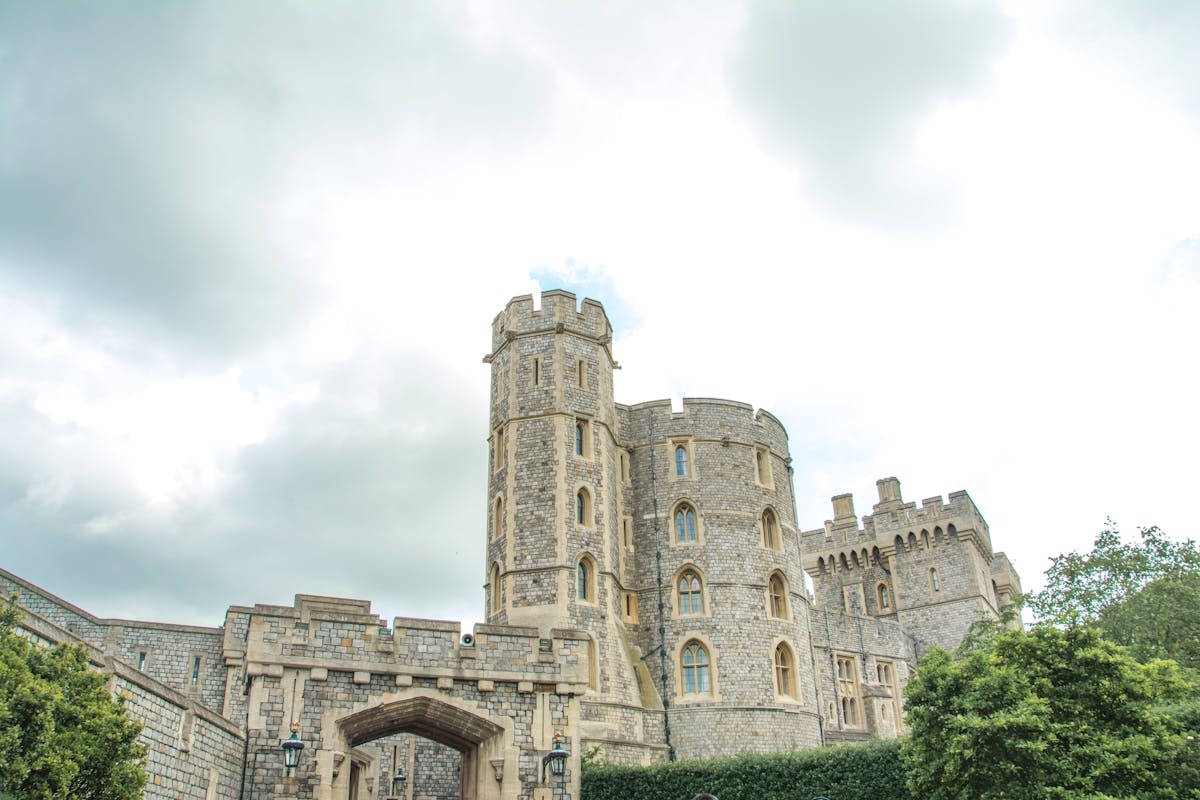
The palace has witnessed some of the most dramatic moments in English history — from Henry VIII’s turbulent marriages to the legend of Catherine Howard’s ghost haunting the gallery. For more royal history, see our upcoming guide on UK castles.
Getting to Hampton Court

| Method | Duration | Details |
|---|---|---|
| Train from Waterloo | 35 min | Direct trains every 30 min. Station is 5-min walk from palace |
| River boat from Westminster | 3-4 hours | Scenic Thames cruise (seasonal, April-October) |
| By car | 40-60 min | From central London via A3. Parking available (£4.50/day) |
The train is the quickest option. For tickets, see our UK train tickets guide. The riverboat trip is slower but wonderfully scenic, passing through Richmond and Kingston.
Palace Highlights
Henry VIII’s State Apartments
Walk through the Great Hall — the largest and most spectacular Tudor hall in England, with its original hammer-beam roof and tapestries. The Tudor kitchens, which once fed 600 people twice daily, have been recreated with stunning detail including period food and costumed staff.
William III’s Apartments
The Baroque south wing designed by Christopher Wren houses elegant state rooms with painted ceilings by Antonio Verrio. The King’s Staircase, Presence Chamber, and Great Bedchamber showcase the grandeur of the late Stuart court.
The Chapel Royal
Still in active use, the Chapel Royal features a magnificent ceiling installed by Henry VIII. Regular services are held and visitors can attend.
The Haunted Gallery
Legend says the ghost of Catherine Howard, Henry VIII’s fifth wife, runs screaming through this gallery. Whether you believe in ghosts or not, the gallery’s atmosphere is palpable.
The Cumberland Art Gallery
Houses part of the Royal Collection, including works by Caravaggio, Holbein, and Bruegel.
The Gardens
Hampton Court’s 60 acres of gardens are among the finest in Britain:
- The Maze — The world’s most famous hedge maze, planted in the 1690s. Finding the centre takes 20-60 minutes. A must-do experience!
- The Great Vine — Planted in 1768 by Capability Brown, this is the oldest and largest grapevine in the world, still producing Black Hamburg grapes
- The Privy Garden — William III’s private garden, beautifully restored to its 1702 design
- The Tiltyard Café — Set in Henry VIII’s jousting arena, perfect for lunch
- The Rose Garden — Spectacular in June-July
Tickets and Practical Information
| Ticket | Price (2026) |
|---|---|
| Adult | £29.90 |
| Child (5-15) | £14.90 |
| Under 5 | Free |
| Concession | £24.90 |
| Maze only | £8.30 |
Opening hours: Palace 10:00-17:30 (summer), 10:00-16:30 (winter). Gardens open earlier. Allow 3-5 hours for a thorough visit.
Suggested Itinerary
- 10:00 AM — Arrive via train, enter the palace
- 10:30 AM — Henry VIII’s State Apartments and Tudor Kitchens
- 12:00 PM — The Chapel Royal and Haunted Gallery
- 12:30 PM — Lunch at the Tiltyard Café
- 1:30 PM — William III’s Apartments and Cumberland Art Gallery
- 2:30 PM — The Maze (allow 30-60 minutes)
- 3:30 PM — Privy Garden, Great Vine, and garden walk
- 4:30 PM — Gift shop and train back to London
Events and Special Occasions
- Hampton Court Palace Festival — Summer music concerts in Base Court (June)
- Hampton Court Palace Flower Show — RHS show in early July, one of the UK’s premier garden events
- Tudor-themed events — Costumed re-enactments and seasonal celebrations throughout the year
- Ice rink — Open-air ice skating in the palace grounds (November-January)
Frequently Asked Questions
How long does it take to visit Hampton Court Palace?
Allow at least 3-4 hours for the palace interiors and maze, or a full day (5-6 hours) to include the gardens, art gallery, and a leisurely lunch. The palace is large and there is a great deal to see. With the audio guide included in admission, you can explore at your own pace.
Is Hampton Court Palace worth visiting?
Absolutely. Hampton Court Palace is one of the finest historical attractions in England, offering a unique combination of Tudor and Baroque architecture, world-class gardens, the famous maze, and 500 years of royal drama. It is less crowded than Buckingham Palace or the Tower of London while offering an arguably richer historical experience.
Can children enjoy Hampton Court Palace?
Yes, Hampton Court is excellent for families. Children love the maze, the Tudor kitchens (with their realistic food displays), and the costumed guides. Activity trails designed for different age groups are available. The gardens provide space to run around, and the palace regularly hosts family-friendly events. See our UK travel with children checklist.
Is the Hampton Court maze difficult?
The Hampton Court maze covers a third of an acre and takes most people 20-40 minutes to find the centre. It is not extremely difficult but can be confusing — that is part of the fun! The traditional trick of keeping one hand on the wall does not work here as the maze contains islands. Children particularly enjoy the challenge. A maze-only ticket is available for £8.30.
Can I visit Hampton Court and Windsor Castle in one day?
While technically possible, it would be very rushed. Both attractions deserve 3-4 hours each, and the journey between them takes about an hour. If you must combine them, focus on the highlights of each and start very early. Most visitors find it more enjoyable to dedicate a separate day to each palace. See our London area itinerary guide for planning.
Pre-departure checklist for Hampton Court Palace day trip: international visitor tips
Firstly, preparing for any UK trip — whether you are flying into London Heathrow from Sydney or driving down from Edinburgh — rewards travellers who plan in layers. Moreover, a structured checklist reduces last-minute airport stress and helps you focus on the experience rather than the logistics.
Documents and money
First, make sure your passport has at least six months of validity from your arrival date. Secondly, confirm your UK ETA is approved and linked to the exact passport you plan to travel with — a mismatched ID number will stop you at the gate. Furthermore, travellers from the United States, Canada, Australia, New Zealand, the EU, Japan, and other visa-exempt regions still need the ETA; the UK ETA is not a visa, but it is mandatory. Additionally, bring two payment methods: one contactless card or phone wallet for transport, and one backup card stored separately. Notably, the UK is almost entirely cashless in 2026; you rarely need more than £20 in coins for rural pubs, parking meters, or tipping.
Connectivity and insurance
Next, arrange your mobile data before you board. Specifically, international roaming charges can still exceed £6 a day on legacy US carriers, so either buy an eSIM pack (Airalo, Holafly, or Three UK) or purchase a physical prepaid SIM at arrivals. Meanwhile, travel insurance remains strongly advised. Although the NHS treats emergencies for tourists, elective care, medical repatriation, and trip cancellation are not covered. Therefore, compare a short-term policy from World Nomads, SafetyWing, or your home provider. In particular, families travelling with children should verify paediatric and prescription coverage.
Final practical steps
Finally, download offline maps for London, your day-trip regions, and every transit hub you plan to use. Besides offline navigation, install the Transport for London Go app, National Rail, and Trainline for live departures. Likewise, pre-book timed-entry tickets for landmarks such as the Tower of London, Westminster Abbey, and Windsor Castle — walk-up queues in 2026 frequently exceed two hours in peak season. Above all, print a backup copy of your accommodation confirmations; UK border officials occasionally request proof of stay on arrival.
Timing and seasonality for your trip
Timing matters more than budget for many UK visits. For instance, prices in central London hotels can double between late October and mid-December, then collapse again in early February. Similarly, attractions in Bath, Oxford, and the Cotswolds swing from peaceful autumn mornings to bumper-to-bumper coach tours by June. Consequently, choosing the right shoulder weeks — late March, mid-May, and early September — usually produces the best balance of weather, price, and crowd levels. In contrast, Christmas-week flights from North America often cost 60% more than a comparable week in January, and booking more than 90 days in advance is the single most reliable way to save money.
On the other hand, summer brings longer daylight (sunset near 21:30 in Edinburgh during June), better hiking conditions in the Lake District and Snowdonia, and a fuller events calendar including Wimbledon, Glastonbury, and the Edinburgh Fringe. Meanwhile, winter visitors gain access to dramatic Christmas markets, quieter museum galleries, and steeply discounted hotel rates in rural counties. Therefore, if you are flexible on dates, check the mid-season weeks before committing. Ultimately, matching the trip purpose to the season — sightseeing, hiking, shopping, or cultural events — matters far more than simply chasing sunshine.
UK ETA vs Standard Visitor Visa — a quick comparison
Many travellers still confuse the UK ETA with a visa. However, they serve different purposes and have very different costs. For instance, the ETA is an electronic pre-travel authorisation for short visits (up to six months) from visa-exempt nationalities, while the Standard Visitor Visa is the full consular route required by passport holders from most African, South Asian, and Middle Eastern countries. The table below clarifies the practical differences.
| Criterion | UK ETA | Standard Visitor Visa |
|---|---|---|
| Who needs it | US, Canada, EU, Australia, NZ, Japan, Singapore, GCC and 40+ visa-exempt nations | India, Nigeria, Pakistan, Philippines, South Africa and most non-exempt nations |
| Application type | Online or mobile app, no biometrics | Online plus in-person biometric appointment at a visa centre |
| Cost (2026) | £20 per person | £135 for six months, £480 for two years |
| Processing time | Usually minutes; up to 72 hours worst case | Three to six weeks, longer in peak months |
| Validity | Two years or until passport expires | Six months to ten years depending on type |
| Max stay per trip | Six months | Six months |
| Activities allowed | Tourism, visiting family, short business meetings, transit | Same as ETA plus study up to 30 days and some recreational courses |
Crucially, the ETA is linked to your passport. As a result, when you renew your passport you must re-apply for the ETA, even if the old one was still valid. In addition, the ETA does not guarantee entry — border officers still make the final decision at Heathrow, Manchester, Gatwick, or Edinburgh. Above all, always travel with a return ticket and proof of accommodation to avoid extra questioning.
Hampton Court Palace day trip — budget breakdown in USD and GBP
For most mid-range visitors, a one-week UK trip in 2026 costs between £1,200 and £2,400 per adult — or roughly USD 1,500 to USD 3,000 at today’s exchange rate. Moreover, the balance shifts depending on whether you stay in central London, split time with a regional base, or road-trip the countryside. The table below outlines a realistic spending plan for a seven-night trip covering London plus one regional extension.
| Category | Budget (per adult) | Mid-range (per adult) | Comfortable (per adult) |
|---|---|---|---|
| Flights (return from US East Coast) | £480 / $600 | £680 / $850 | £1,040 / $1,300 |
| UK ETA | £20 / $25 | £20 / $25 | £20 / $25 |
| Accommodation (7 nights) | £420 / $525 | £910 / $1,140 | £1,820 / $2,275 |
| Transport (Oyster + trains) | £75 / $95 | £130 / $165 | £210 / $265 |
| Food and drink | £155 / $195 | £275 / $345 | £460 / $575 |
| Attractions and activities | £95 / $120 | £175 / $220 | £320 / $400 |
| Insurance | £35 / $45 | £55 / $70 | £95 / $120 |
| Weekly total | £1,276 / $1,600 | £2,241 / $2,810 | £3,961 / $4,955 |
Notably, families travelling with children can reduce costs by booking family rooms instead of two doubles, using the 1-Day Travelcard for shared days, and taking advantage of free museum entry across the V&A, British Museum, Science Museum, and National Gallery. Besides these savings, look for regional tourist passes such as the London Pass, Great British Heritage Pass, or BritRail Pass if you are covering multiple cities — breakeven usually happens on day three.
Extra frequently asked questions
Do I need a separate UK ETA for each traveller?
Yes. Specifically, every traveller including infants and children needs an individual ETA application linked to their own passport. Furthermore, the £20 fee applies per person and cannot be bundled into a family rate. Notably, one person can still submit all the forms on behalf of a household through the UK Home Office mobile app or web portal.
How far in advance should I apply for the ETA?
Apply at least 72 hours before departure, though most approvals arrive within minutes. However, peak-season travel (July, December, and Easter) occasionally slows the backend queue, so building a 3–5 day buffer is sensible. In addition, submit applications after you have booked flights — the ETA does not require itinerary upload, but officials may request travel details during border checks.
Can I extend my stay beyond six months on the ETA?
No, the six-month limit is strict. Consequently, travellers who plan to remain longer must apply for an appropriate extension or a separate visa route from within the UK — or leave and return later. Overstaying carries serious immigration consequences including future entry bans. Therefore, always plan return travel well before the six-month mark.
Does the ETA cover transit through the UK?
Yes for airside transit plus landside layovers. Specifically, the UK scrapped the separate Direct Airside Transit Visa requirement for most nationalities in 2024, so the ETA now covers passengers changing flights at Heathrow, Manchester, Edinburgh, or Gatwick. Meanwhile, travellers staying landside for longer than 24 hours should plan activities and accommodation as though it were a full visit.
What happens if my ETA is rejected?
First, do not panic. Rejection is rare for first-time visitors with a clean immigration record, but if it happens you will receive an explanation by email. Subsequently, you may apply for a Standard Visitor Visa through the normal consular route, which includes biometrics and an interview. In contrast to the ETA, the visa process can take 3–6 weeks, so plan accordingly.
 English
  العربية
  বাংলা
বাংলা  Български
  Català
  简体中文
简体中文  Hrvatski
  Čeština
  Dansk
Dansk  Nederlands
  Eesti
Eesti  Suomi
Suomi  Français
  Deutsch
  Ελληνικά
  עִבְרִית
  हिन्दी
  Magyar
  Íslenska
  Bahasa Indonesia
  Italiano
  日本語
日本語  한국어
한국어  Latviešu valoda
  Lietuvių kalba
  Bahasa Melayu
  Norsk bokmål
  Polski
  Português
  Română
  Slovenčina
  Slovenščina
  Español
  Svenska
  Türkçe
  Tiếng Việt